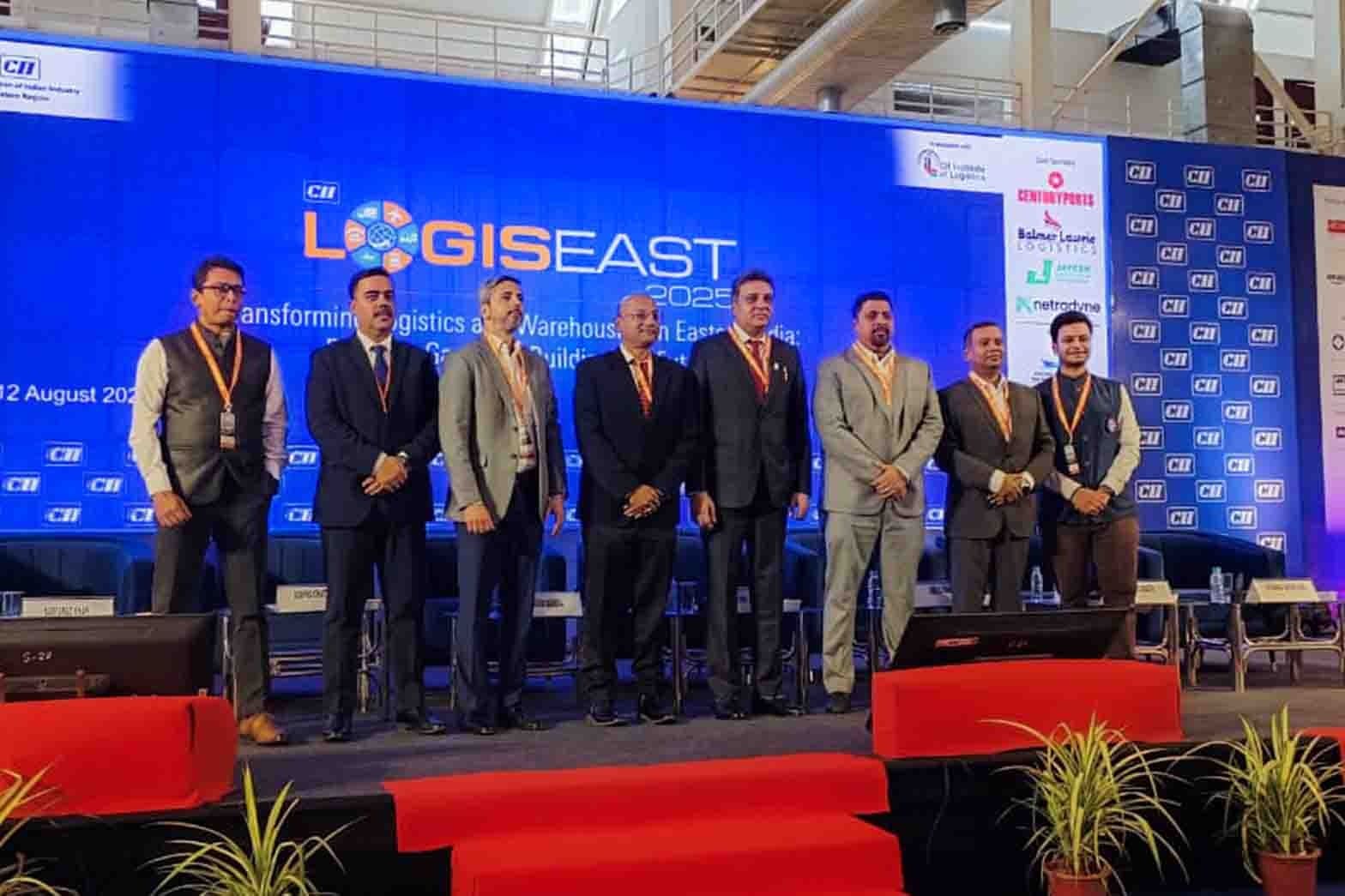
India’s logistics and warehousing sector is at a pivotal point. With rapidly growing demand across manufacturing, e-commerce, retail and supply chains, the country is witnessing an urgent call for Grade-A warehouses. This very need was highlighted by Mr. Shouvik Mandal, CEO – Apeejay Real Estate & Apeejay Logistics, during his address at the CII Logistics Summit 2025 held at the Biswa Bangla Convention Centre, Kolkata.
The Warehousing Deficit: A Stark Contrast with Global Standards-
Sharing a global perspective, Mr. Mandal outlined the sheer scale of India’s warehousing gap. In the United States, a developed economy with a population of around 35–40 crore, total warehousing stock exceeds 30 billion sq. ft.. By contrast, India, with a much larger population of 140 crore, has only 5–6 billion sq. ft. This translates into a major disparity in per capita availability. While warehousing space in the U.S. averages 100 sq. ft. per person, in India, it is a mere 2 sq. ft. per person. Such a gap underscores the pressing need for rapid expansion of modern, Grade-A warehousing facilities across the country.
Challenges on the Ground:
Despite the demand, developers face significant hurdles such as:
- High land cost: In urban and semi-urban areas, land prices average around ₹3–3.5 crore per acre and can rise further due to regulations.
- Regulatory constraints: Current policies restrict warehouse construction to about 40% coverage on urban land, pushing the effective cost per acre to nearly ₹5 crore.
- Investor viability: At these cost levels, building sustainable warehousing solutions becomes extremely difficult.
Moreover, India’s long-standing goal of reducing logistics costs—from 14–15% of GDP to under 9%—is not achievable without policy-level changes and cost-effective supply chain infrastructure.
Innovative Solutions for a Smarter Future. To overcome these challenges, Mr. Mandal emphasized the importance of both policy reforms and developer-driven innovations. A key strategy already in motion at Apeejay Logistics is the creation of double-storey warehouses (the “one-plus-one” model).
These advanced facilities come with:
- Ramps and heavy-duty cargo lifts for smooth operations
- Optimized land utilization
- Greater storage capacity without breaching regulatory norms
The group has successfully developed its first double-storey warehouse in Northern India, with additional projects underway in Dankuni and other strategic hubs.
A Call for Collaborative Action:
Mr. Mandal concluded by stressing that solving India’s warehousing challenge requires a collaborative approach between policymakers, developers and logistics stakeholders.
With innovative designs, efficient execution and forward-thinking policies, India can not only bridge the supply gap but also create a robust ecosystem that drives economic efficiency.
At Apeejay Real Estate & Apeejay Logistics, we remain committed to pioneering forward-looking warehousing solutions that meet the evolving needs of India’s supply chain and logistics sector.