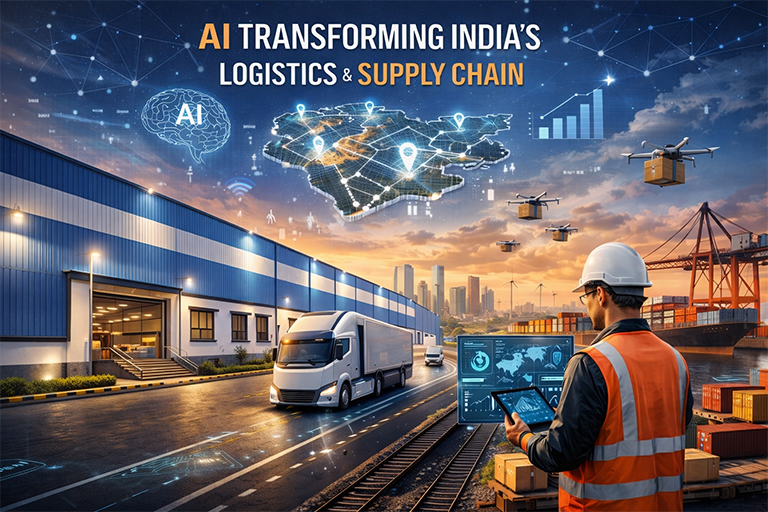
India’s logistics sector is entering a phase of rapid transformation, driven by digital innovation and the increasing relevance of artificial intelligence (AI). With over USD 270 billion in AI investment commitments highlighted at the India AI Impact Summit 2026, the logistics ecosystem is expected to witness significant advancements in efficiency, coordination, and scalability.
Currently valued at more than USD 317 billion, India’s logistics industry remains a key contributor to economic growth. However, logistics costs still account for approximately 13–14% of GDP—considerably higher than the global average of 8–9%. This gap highlights the potential for technology-led improvements across logistics parks, warehousing, and transportation systems.
AI and the Evolution of Logistics Parks-
Across the industry, logistics parks are gradually evolving into more technology-enabled environments. AI-powered systems are being explored to enhance warehouse management, demand forecasting, and operational planning. These innovations have the potential to improve inventory accuracy, reduce turnaround time, and support more efficient supply chain flows. At Apeejay Real Estate, the focus remains on modernising logistics infrastructure, building high-quality, well-planned logistics parks that are future-ready and capable of supporting evolving technological integrations as the industry progresses.
Smarter Transportation and Route Optimisation-
AI-driven route optimisation is emerging as a key enabler for efficient logistics operations. By analysing variables such as traffic, delivery schedules, and fuel consumption, AI can help streamline transportation planning and reduce operational inefficiencies. While such technologies are gaining traction, their effectiveness depends on a strong digital foundation—something that continues to evolve across India’s logistics landscape.
Challenges::Data Fragmentation and Ecosystem Complexity-
One of the biggest challenges in AI adoption within logistics is data fragmentation. Many supply chains still rely on a combination of legacy systems, manual processes, and disconnected platforms, making it difficult to create the consistent datasets required for AI-driven decision-making.
Additionally, India’s logistics network is highly fragmented, with nearly 80% of trucking operators managing fleets of fewer than 10 vehicles. This decentralised structure often limits coordination and reduces overall asset utilisation. Addressing these challenges will require industry-wide efforts towards standardisation, digital infrastructure development, and greater collaboration across stakeholders.
Workforce Transformation and the Need for Upskilling –
India’s logistics sector supports over 22 million workers and is projected to require an additional 4.7 million by 2030. As technology adoption increases, the industry is witnessing a gradual shift towards more digitally enabled roles. This makes workforce upskilling critical. Training in digital tools, operational technologies, and data-driven systems will be essential to ensure a smooth transition and sustained industry growth.
Governance and Responsible Technology Adoption-
As AI becomes more integrated into logistics operations globally, questions around governance, transparency, and accountability are gaining importance. Ensuring that technology supports human decision-making while maintaining operational control will be key to long-term success.
Looking Ahead: Infrastructure as the Foundation of Innovation-
AI is set to play an important role in shaping the future of logistics parks and supply chains in India. While challenges around data readiness and infrastructure remain, the direction is clear—towards smarter, more efficient, and technology-enabled logistics ecosystems. At Apeejay Real Estate, the emphasis is on developing modern, well-connected logistics parks that are designed to support the next phase of industry evolution—creating a strong foundation for future technological advancements and sustainable growth.