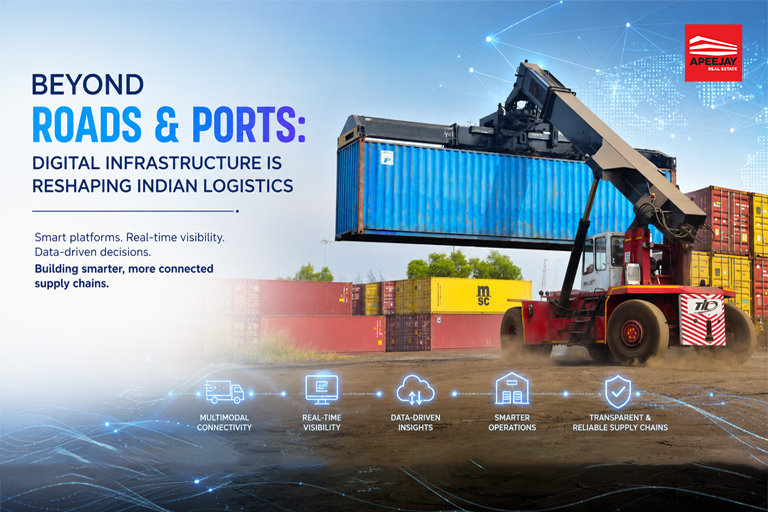
India’s logistics sector is entering a new phase. Alongside investments in highways, railways, ports, freight corridors and logistics parks, the country is building a strong digital ecosystem to make supply chains smarter, faster and more transparent.
The next generation of logistics will depend not only on moving cargo efficiently, but also on moving accurate information with it.
From Infrastructure to Intelligence:
Initiatives such as PM Gati Shakti and the National Logistics Policy are encouraging a more integrated approach to logistics. The focus is expanding from individual transport networks towards better coordination between infrastructure, technology, government systems and businesses.
Digital platforms are central to this transformation.
The Unified Logistics Interface Platform (ULIP) enables secure and standardised information exchange across logistics stakeholders and government systems. The Logistics Data Bank (LDB) further strengthens cargo visibility by supporting container tracking across different stages of movement.
Together, such technologies are helping reduce information gaps across the supply chain.
Why Real-Time Visibility Matters:
For businesses, knowing where a shipment is — and identifying possible delays early — can significantly improve planning.
Real-time cargo visibility enables companies to coordinate transportation, inventory and warehouse operations more effectively. Instead of reacting after a disruption occurs, businesses can make quicker decisions based on available information.
This is particularly important in multimodal logistics, where cargo may travel through road, rail, ports, inland container depots and warehouses before reaching its destination.
Data Is Becoming a Logistics Asset:
Digitalisation also allows businesses to use logistics data more effectively.
By analysing shipment patterns, turnaround times and operational bottlenecks, companies can improve route planning, resource utilisation and inventory management while anticipating potential disruptions.
This shift towards data-driven decision-making can make supply chains more predictable and responsive.
Physical + Digital: The Future of Logistics:
Digital technology does not replace physical infrastructure — it increases its effectiveness.
A modern warehouse delivers greater value when cargo can be tracked accurately. A freight corridor becomes more efficient when shipment information is readily available. Logistics parks and inland container depots can perform better when stakeholders are connected through reliable information systems.
India’s logistics future will therefore be built on the combination of physical connectivity and digital intelligence.
As the country strengthens both, logistics can become more integrated, transparent and responsive — supporting businesses as they operate across increasingly complex supply chains.
Apeejay Real Estate continues to contribute to India’s evolving business and logistics landscape through strategically located infrastructure designed to meet the changing requirements of modern enterprises.